
Technology
How a Reddit Security Engineer Rebuilt His Home Lab with the HL8
Principal Security Engineer Spencer Koch built his 45HomeLab HL8 into the storage foundation for a modern self-hosted environment. Paired with Talos Kubernetes nodes, it supports everyday household services, hands-on experimentation, documented recovery, and the freedom to keep learning without vendor lock-in.
Homelabber
Technology
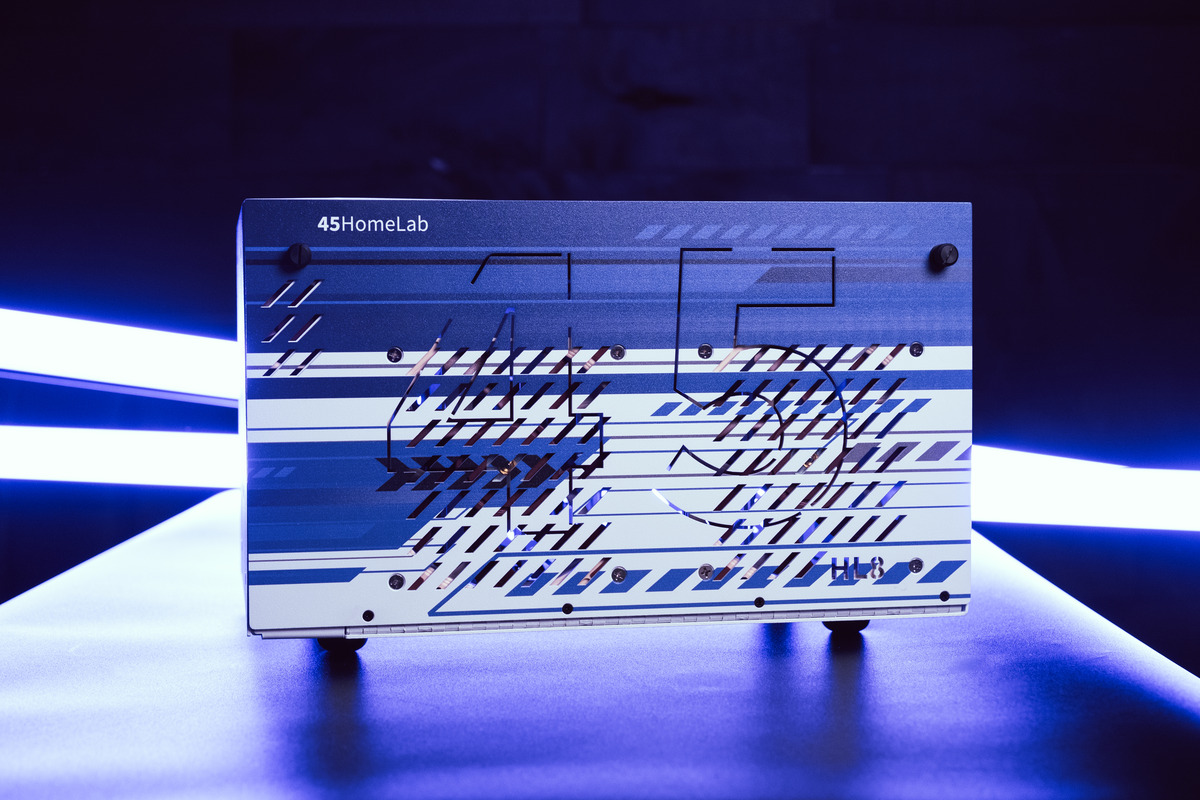
For Spencer Koch, homelabbing is not just about running services at home. It is a practical way to stay current, understand infrastructure more deeply, and have a place to experiment safely.
His previous setup was an aging all-in-one server that handled both storage and workloads. After nearly a decade, it was no longer keeping up. Some of the drives were older than his youngest child, and when Plex or the household password manager went down, it became clear the environment needed a full refresh.
“I needed to overhaul the complete thing,” he shares.
As a security engineer, Spencer wanted more than a simple replacement. He wanted a modern setup that could grow with him, help him explore new technologies and give him complete control over how his data and services were managed.
The Challenge Building Without Vendor Lock In
Spencer considered off-the-shelf NAS options, but he wanted a more hands-on approach: “I really prefer to run my own stuff and be more hands-on, because that is how I learn and grow.”
For him, understanding the infrastructure is part of the value. He wants to know how storage, monitoring, networking, backup, encryption and recovery work together. That knowledge helps him stay sharp in his day-to-day security work while also giving him the confidence to make changes to his home environment on his own terms.
He wanted to move away from one large hyperconverged system and toward an environment where compute and storage could evolve independently.
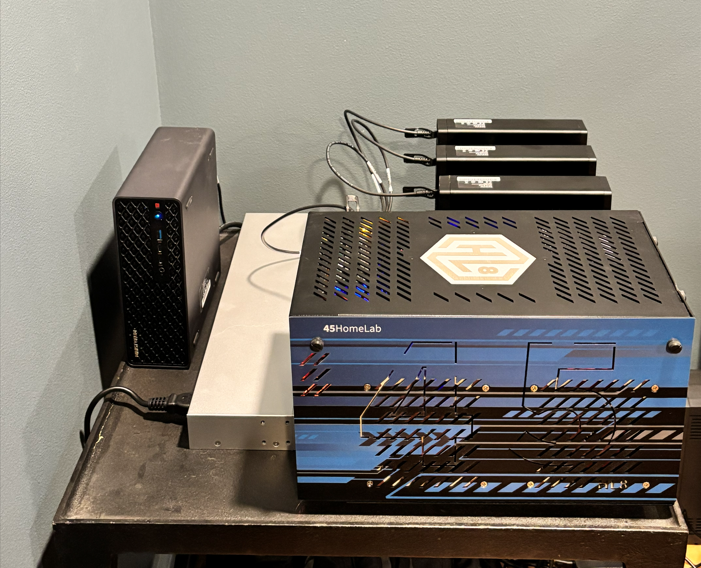
The Solution A 45HomeLab HL8 Built for Flexibility
Spencer discovered 45HomeLab through the Home Operations community, where other homelab builders were sharing their own setups and experiences.
He chose a fully assembled HL8 and made it the storage backbone for his refreshed home infrastructure. Combined with a Talos-based Kubernetes environment, the HL8 gives Spencer a dependable platform for running services, managing storage, and testing new ideas.
“It came out of the box, worked perfectly fine, and everything was straightforward and self-service.”
The HL8 gave Spencer a foundation that he could adapt as his setup changed. When he decided to add SSDs and revise part of his original plan, the process was simple and flexible.
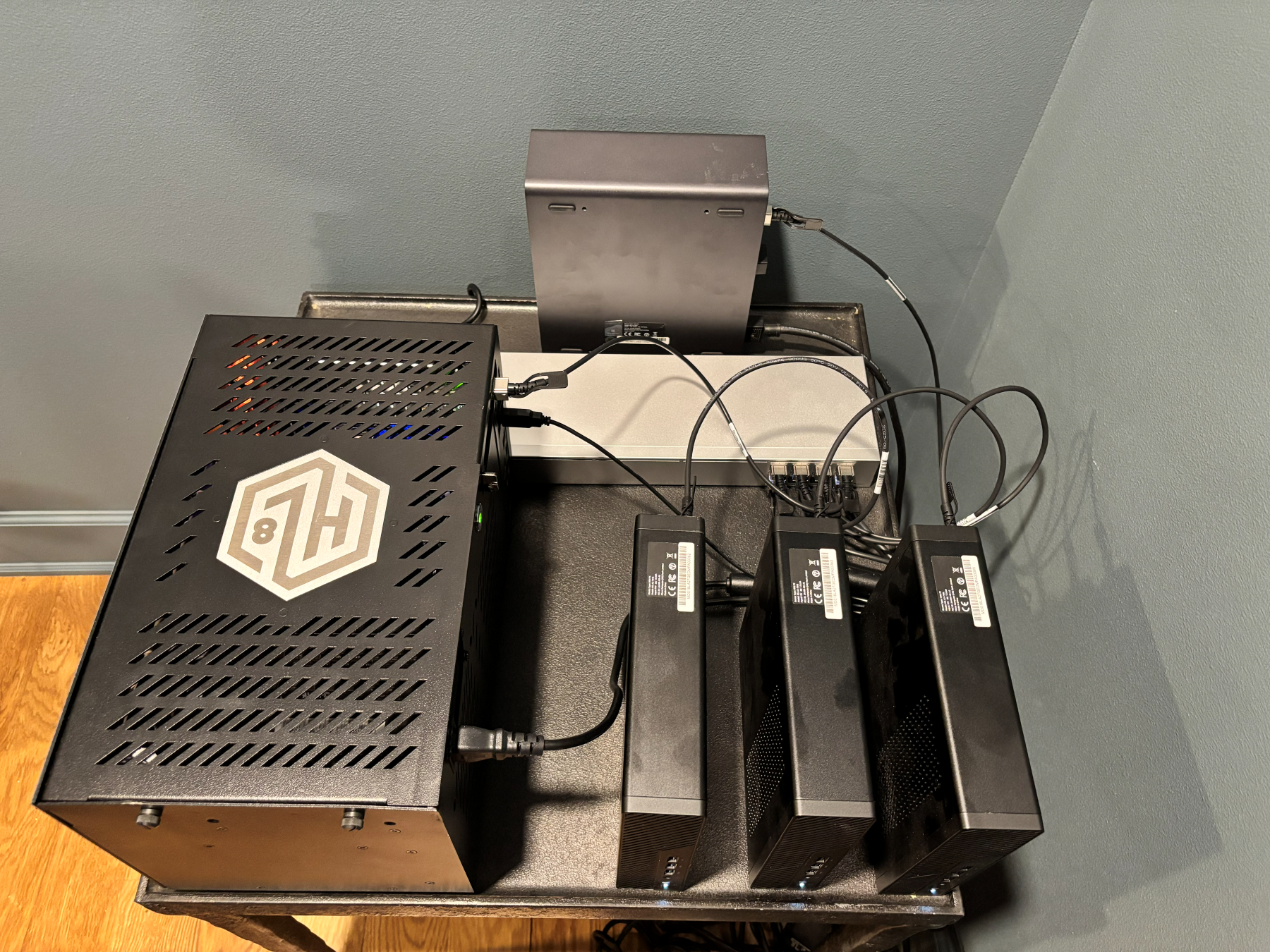
A Home Lab for Everyday Services and Serious Experimentation
Spencer’s homelab supports both practical household services and deeper technical projects. Plex and password management are part of the day-to-day experience at home, while Kubernetes workloads, storage testing, monitoring and recovery planning give him room to explore.
He documents his environment using GitOps practices and backs up his data to Backblaze. That means he can rebuild, replace drives, or change the architecture without losing control of his data.
“I can rebuild it or swap out drives at my leisure because I set up my own backup solution and understand the encryption models and local recovery,” he says.
He also monitors energy usage at the circuit level with Prometheus, giving him a clearer view of what his setup costs to run each month.
Using AI to Learn Faster
Spencer also uses AI as a tool to speed up the repetitive parts of infrastructure work without skipping the learning process.
In the past, a full homelab rebuild could take a month of his time. With clear documentation of his goals, hardware and desired outcomes, he used AI to help structure deployments and draft Ansible configuration. His refreshed environment, including the HL8 and Kubernetes nodes, came together in a weekend.
“I could focus on the testing and the outcomes,” he shares. “I understand how it works, or I know how to ask the questions.”
For Spencer, AI is most useful when it helps him understand unfamiliar concepts. Whether he is learning about iSCSI backups, storage design, or a new Kubernetes tool, he uses it to ask questions, review options and build a stronger understanding before putting anything into production.
The Verdict: A Platform for the Inquisitive Builder
For Spencer, the HL8 is more than a storage server. It is a long-term platform for learning, experimentation and self-hosted control.
It has helped him modernize an aging environment, separate storage from compute, keep household services reliable and create a place where he can test the technologies that matter to his work.
Whether he is refining a backup workflow, measuring power consumption, or exploring a new Kubernetes project, Spencer has an infrastructure foundation that can keep evolving with him.
Ready to Build Your Own Homelab
Whether you are running media services, experimenting with Kubernetes, planning stronger backups, or building infrastructure you fully control, the right foundation makes all the difference.
Explore the 45HomeLab lineup and build a system that grows with you.